


2005+ C&L 3-VALVE MUSTANG INTAKE MANIFOLD
Order yours today!

C&L  3V Intake Manifold
C&L 3V Intake Manifold (U.S. Patent No. D580,547)

Now Shipping!

FLOWS 330 CFM PER RUNNER!

The editors of Muscle Mustangs and Fast Fords magazine performed an ALL NEW dyno test of the final production version of our new intake manifold. This was for an upcoming special issue that will go on the news stands by the first of the year. The test was performed on a high horsepower naturally aspirated engine, equipped with fully ported heads and cams. The results were as good as we could possibly expect. More importantly, the engine was tested in the following different configurations:

Stock Intake, factory charge motion plates, stock throttle body.
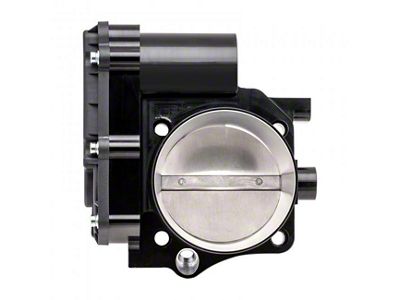
Stock Intake, factory charge motion plates, GT500 throttle body.
Stock Intake, CMVC Delete plates, stock throttle body.
Stock Intake, CMVC Delete plates, GT500 throttle body.
C&L Intake Manifold, GT500 throttle body.
C&L Intake Manifold, Single Blade throttle body.
C&L Intake Manifold, Single Blade throttle body and 30 min. "cool down".


ALL of these tests were performed so that everyone would be able to see the exact differences between many of the EXISTING configurations that have been used in comparison with what is now possible with our new intake manifold. Although modifying the factory intake can be a relatively inexpensive way to achieve a modest performance improvement over the original stock configuration, it is in no way comparable to what is possible with our all new complete replacement 3V intake.

We reccomend that people use the factory throttle body for applications below 350 rear wheel HP, and the single blade Whipple manufactured throttle body for those looking to make the MAXIMUM possible horsepower in applications making 350 or more rear wheel HP. We are in the process of gathering test data from other throttle bodies on a naturally aspirated 3V Mustang that generates more than 400 rear wheel HP. Once this tesing has been finalized, we will post the results along with our reccomendations. Thus far, the Whipple single blade throttle body has proven superior in performance during all of our testing, but it is quite expensive and DOES require special tuning adjustments in order to control the engine RPM whenever the throttle is released or the clutch is depressed and the engine comes "off load". Although this throttle body entails more cost and effort than others, testing shows that it is not equaled in performance (among throttle body upgrades for this engine) and can ONLY be used in conjunction with our intake manifold.


SD Wheeler, NMRA Ultra Stang Champion
2-time NMRA "Ultra Stang" Champion, SD Wheeler, now uses the C&L 3V Intake Manifold for competition during the 2010 racing season. Check it out at an upcoming NMRA race in your area!


The dyno tests shown below were independent tests performed by Livernois Motorsports. The dyno chart on the left is a comparison between a stock intake manifold and our new shorter runner design manifold. The dyno chart on the right is a comparison between our older "long runner" design and our new shorter runner design. Previous testing of the "long runner" version of the intake showed gains of around 27 rear wheel horsepower over the stock intake. The production version of the intake (with it's shorter runners) added as much as 42 rear wheel HP (at 6,800 RPM) over the stock intake manifold. These tests were performed with the same dyno and on the exact same engine.


The dyno test below on the left was performed on our in house test vehicle to compare the stock intake manifold with our new shorter runner manifold on a TOTALLY stock engine. The only modifications previously performed on our test vehicle were our C&L Racer Air Intake and a CL7140 DiabloSport Tune. Note the same air/fuel ratio on both tests. This test was with a totally STOCK throttle body. Installation of a higher flowing throttle body reduces the power loss in the middle RPM range (from 4,300 to 5,000 RPM). The dyno test below on the right was performed on a Saleen Mustang with a fully built high RPM engine. This test shows a comparison between a stock intake manifold outfitted with billet delete plates and a GT500 throttle body versus our production intake manifold equipped with a single blade throttle body. Note that these improvements are BEYOND a factory intake that was already equipped with delete plates.


The two dyno charts below show the before and after testing performed by Evolution Performance for the June 2009 MM&FF article. The BEFORE test (left) is with the stock intake manifold, long tube headers, cams, off road pipe, C&L Racer Intake and tuning. The AFTER test (right) is with the addition of a C&L 3V Manifold and a Whipple single blade throttle body.


"The intake performed exactly as Bender predicted. ... a stellar 27 rwhp better than the baseline numbers." June 2009 MM&FF


"The C&L intake will perform admirably at the track and on the street." - June 2009 MM&FF


The dyno chart below is a turbo charged car. This vehicle was experiencing a cylinder misfire on the top end in both the before and after runs which accounts for the wavy reading up top. This car made 547 and 548 before the intake and throttle body and 619 and 605 after installing the intake and single blade throttle body.


WHAT TO EXPECT FROM THIS PRODUCT:

1. The installation of this intake manifold is extremely easy and straightforward. No special tools are required and it is designed to utilize either the factory stock fuel rails or direct aftermarket replacement rails. We have confirmed the fitment of the "Fore Performance" fuel rails, and they will work on this intake manifold without issue, should you need them. We have gone through a great deal of effort to make every aspect of this product fit "perfectly", and this has helped to ensure that virtually anyone can install this product, provided that they follow the detailed supplied instructions.

2. Each runner on this intake manifold flows between 325 to 330 CFM. This flow capacity is greater than ANY currently available cylinder head option for the 3V engine, which means that it will not pose a restriction to ANYONE at this point. We have an ALL-NEW aftermarket cylinder head design that we have been working on for some time, and sample castings have already been made. Once machining has been programmed for these new cylinder heads, the flow capacity is expected to approach (but not exceed) that of our intake manifold's runners. Combined together as a "matched set", the minimum flow capacity per cylinder should be at least 320 CFM when air is flow tested through both the intake manifold and the intake port of the cylinder head together. This pairing will allow for higher levels of power than what has previously been achieved with built 3V engines.

3. Below 3,200 RPM, the performance of the new intake will be identical to, or slightly better than, the factory intake at wide open throttle. Even though the CMVC flaps are not present, the high flow capacity of the intake manifold combined with runner length ensures that no power is lost below 3,400 RPM, which is the point at which the factory CMVC flaps open.

4. Power above 5,000 RPM will peak higher and maintain it's level all the way to redline (as shown the "after" dyno tests), while the factory intake manifold falls off sharply at 6,200 RPM. The gains over the factory intake manifold will be directly related to the power that the engine is generating. On a totally stock engine, the improvement over stock will fall in the 11 to 14 HP (max) range, but on more heavily modified engines with cams and ported heads, gains above 30 HP to as high as just over 40 HP are possible in the upper RPM range (See Livernois, white Saleen and turbo car test data). This means that average horsepower throughout your SHIFTING RPM will be superior to the factory intake design, which is exactly where you need it as you are going through the gears at wide open throttle. The "loss" of midrange power will have only minimal effect on your performance in the first gear that you are in when you go wide open throttle, but will have NO effect if your launch RPM is above this point.

5. From approximately 3,400 RPM to 4,800 RPM, there will be a midrange "loss" as opposed to the factory stock intake equipped with the factory charge motion flaps. This does not mean that there will be a "dip" in the power curve, but rather a lack of two "humps" that occurs with the factory intake manifold. The HP graph will still rise at a 45 degree angle with the new intake installed. At 3,400 RPM, the factory CMVC flaps open, which enhances midrange power through an increase in air velocity. This coupled with the manifold being tuned for power in the 4,000 to 5,500 RPM range causes two small "spikes" in the power curve. The elimination of the CMVC plates in conjunction with a shorter runner design causes the power curve to run "flat" (and straight) below these "humps".

6. The installation of a higher flowing throttle body will offer only modest (2 to 4 HP) gains on engines making less than 350 rear wheel HP, but gains of as much as 8 to 10 rear wheel HP on engines making closer to 400 rear wheel HP. Although "peak" horsepower is not improved my much in most applications, the installation of an aftermarket throttle body with our intake manifold minimizes the small midrange loss that occurs between 3,400 and 5,000 RPM.

7. Our 3V Manifold is cast from aluminum, and fully dressed it weighs just under 15 lbs more than the factory plastic intake manifold. If additional weight is of concern, then we reccomend that you look into purchasing a Braille carbon fiber battery, which at under 10 pounds will MORE than offset the difference between the factory intake and our new assembly.

This product does require tuning. Every tuner has a different technique and it is for this reason we will not guarantee SPECIFIC horsepower gains. Your gains will depend on the level of modifications performed to your vehicle and quality and accuracy of your tune. We will be supplying tuning tips with this product for you to provide to your tuner.

(All product names, model names, brands and other trademarks referred to within the C&L Performance Inc website are property of their respective trademark holders)

PART#      APPLICATION PRICE
720 2005-2009 C&L 3V Intake Manifold (U.S. Patent No. D580,547)$799.00

Copyright © 1997 - 2009 C&L Performance
207G Green Cove Rd. Huntsville, Alabama 35803
Phone: (256) 882-6813 - Fax: (256) 882-2508